Jellyfish
No brain, no bones, no problem — for 500 million years
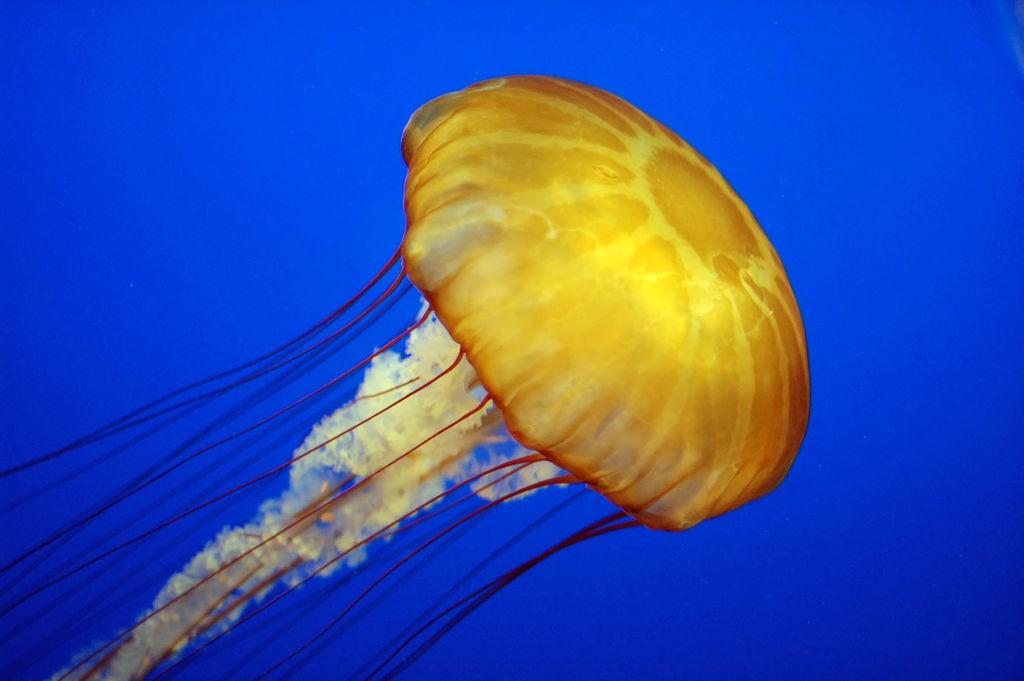
Photo via Wikimedia Commons
Overview
Jellyfish are among the oldest animals on Earth, predating fish by hundreds of millions of years. They have no brain, no heart, no bones, and no blood — and yet they're among the most successful animals in the ocean. Most are far less dangerous than beachgoers imagine.
Friendly fact
A group of jellyfish is called a "smack." And because they have no brain, "traveling" for a jellyfish means drifting with ocean currents — an entire life spent going wherever the sea takes you.
Fascinating facts
- 1
Jellyfish have survived five mass extinction events, including the one that wiped out the dinosaurs.
- 2
The immortal jellyfish (Turritopsis dohrnii) can revert to its juvenile form when stressed, potentially allowing it to live indefinitely.
- 3
Jellyfish are 95% water — they're essentially organized seawater.
- 4
Most jellyfish stings cause nothing worse than a rash. Only a handful of species worldwide can cause serious harm.
- 5
Jellyfish blooms are an important food source for sea turtles, ocean sunfish, and some seabirds.
Myth vs. Reality
Myth
You should urinate on a jellyfish sting.
Reality
This is false and potentially makes it worse. The correct treatment is to remove visible tentacles with a card (not bare hands), rinse with seawater (not fresh water), and apply heat or lidocaine. Urine is ineffective.
Myth
Dead jellyfish can't sting you.
Reality
Jellyfish tentacles can continue firing stinging cells for hours after the animal dies. Don't touch beached jellyfish.
Myth
All jellyfish are as dangerous as the box jellyfish.
Reality
Most jellyfish species have stings too weak to even penetrate human skin. The box jellyfish — found mainly in the Indo-Pacific — is the genuinely dangerous exception.
🕸️ Food Web
Arrows show energy flowing from prey up to predator.
Eaten by
Eats
Sea turtles are largely immune to jellyfish stings and rely on them as a major food source.