Vulture
Nature's essential cleanup crew — and one of the most unfairly maligned birds alive
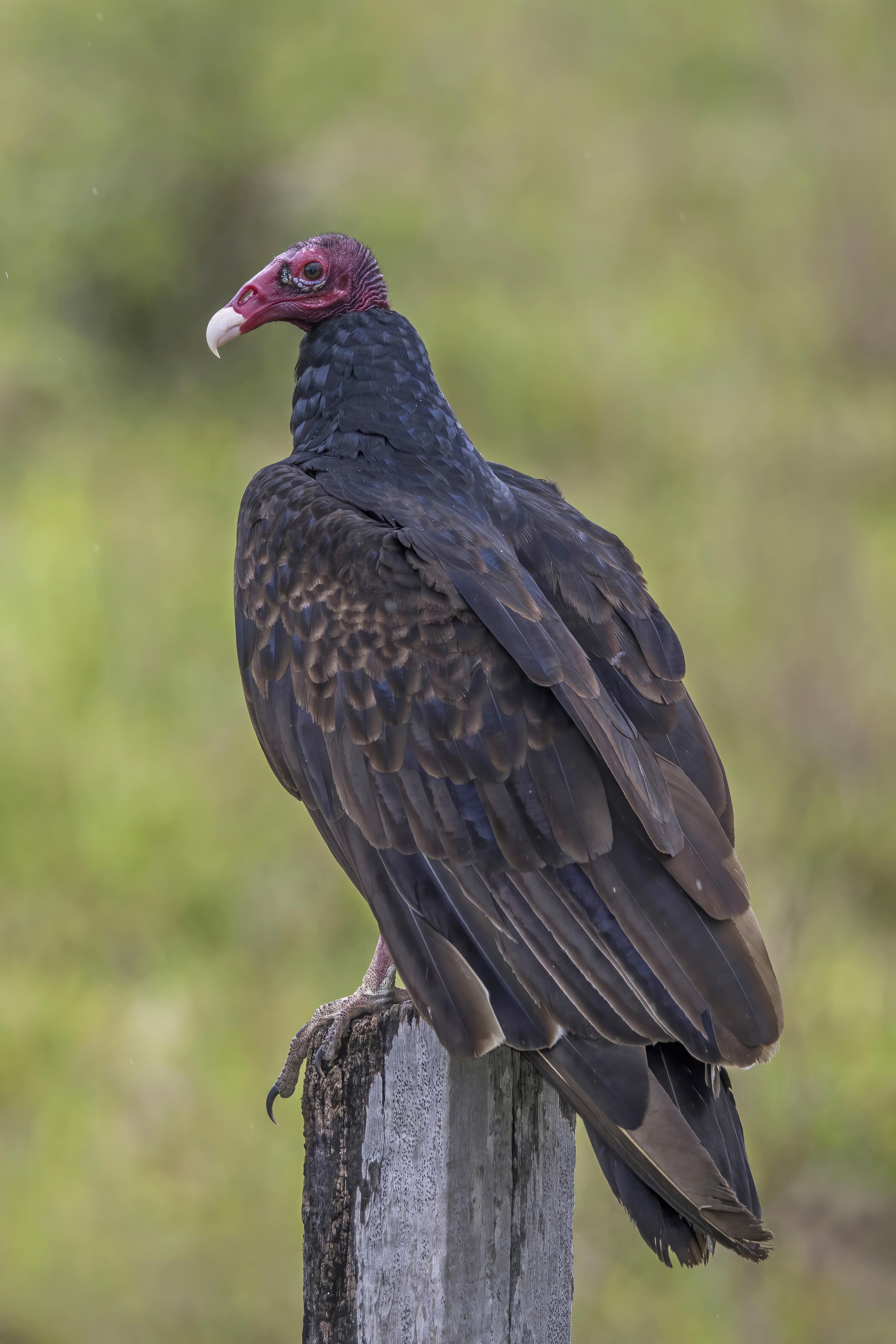
Photo via Wikimedia Commons
Overview
Vultures perform one of the most important ecological services in the animal world — disposing of carcasses before disease can spread. Their stomach acid destroys anthrax, botulism, and cholera that would kill any other scavenger. Their bald heads are a hygiene adaptation. The fear they inspire is cultural, not biological.
Friendly fact
Turkey vultures are remarkably gentle — their feet can't harm a person, they rarely vocalize (they have no vocal organ), and their primary defense when threatened is projectile vomiting, which is startling but harmless.
Fascinating facts
- 1
Vulture stomach acid has a pH of around 1 — more corrosive than battery acid — allowing them to safely consume carcasses infected with anthrax, botulism, and cholera that would kill any other animal.
- 2
Vultures urinate on their own legs (urohidrosis) — the evaporation cools them, and the acidic urine kills bacteria picked up from standing in carcasses.
- 3
A group of vultures feeding is called a 'wake.' The circling behavior in the air (a 'kettle') uses thermal updrafts for efficient soaring — they're not waiting for something to die, they're surveying.
- 4
New World vultures locate food primarily by smell, detecting decomposition gases from over a kilometer away. Old World vultures rely on sight. The two groups evolved scavenging independently.
- 5
Where vulture populations collapsed in India (from diclofenac poisoning in the 1990s), feral dog populations exploded and rabies rates rose sharply. Vultures suppress disease at ecosystem scale.
Myth vs. Reality
Myth
Vultures circle dying animals waiting for them to die.
Reality
Vultures circle to gain altitude on thermal columns — an efficient travel and scouting technique. They locate food by smell and sight, not by tracking a weakening animal's movements.
Myth
Vultures are dirty, disease-spreading birds.
Reality
Vultures are disease eliminators. By consuming carcasses before bacteria breed and spread, they suppress pathogens that would otherwise enter soil and water.
Myth
Vultures attack livestock.
Reality
Vultures have weak feet compared to raptors and cannot kill healthy animals. The very rare cases of vultures near a live animal involve one already too weak to move.
🕸️ Food Web
Arrows show energy flowing from prey up to predator.
Eats
🛡️ No natural predators as an adult
Vultures have almost no predators — eating one carries a high risk of disease, and they're powerful fliers that are hard to catch. As nature's cleanup crew, they keep carcasses from spreading disease to other animals.