Axolotl
Extinct in the wild except for a few canals in Mexico City — while millions live in tanks and laboratories worldwide
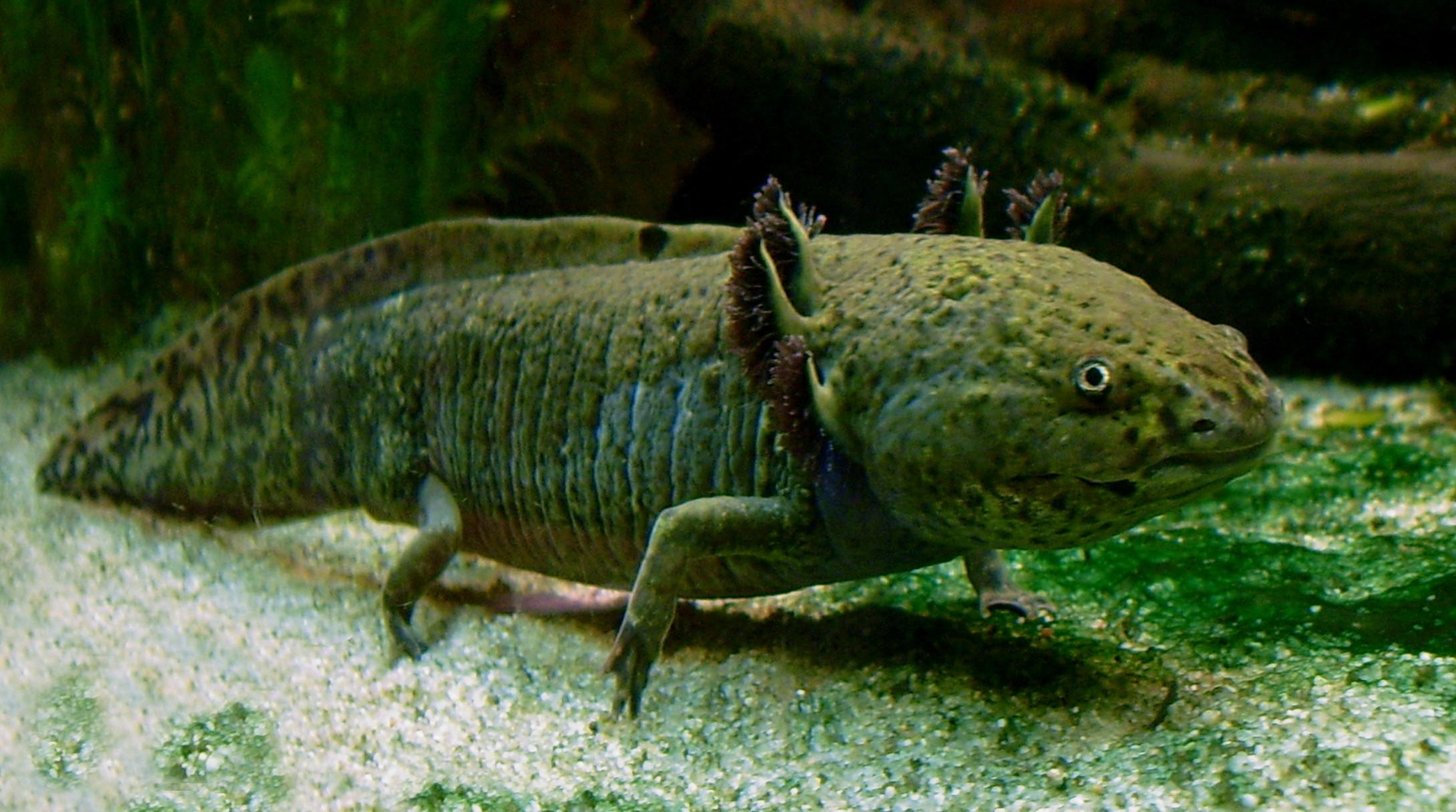
Photo via Wikimedia Commons
Population
Fewer than 1,000 in the wild; millions in captivity worldwide
Location
Lake Xochimilco canal system, Mexico City, Mexico
Overview
The axolotl is one of the most recognizable animals in the world — a wildly popular pet and laboratory animal kept in the millions globally. It is also one of the most endangered, surviving in the wild in only a tiny fragment of its original range: a canal system within Mexico City. Wild and captive axolotls are almost entirely genetically separate; captive populations won't save the wild. The disconnect between their global fame and their actual conservation status is striking.
Why they're at risk
- !
Habitat destruction — Lake Xochimilco, the axolotl's entire wild range, is a remnant canal system surrounded by urban Mexico City, with water quality declining from urban runoff.
- !
Introduced species, particularly tilapia and carp introduced in the 1970s and 1980s, eat axolotl eggs and juveniles and compete for food.
- !
The wild population is so small and fragmented that chance events — a single disease outbreak or pollution event — could eliminate it.
- !
Captive axolotls, while numerous, represent a heavily inbred gene pool derived from a few founding animals taken to France in 1863. They are genetically impoverished compared to the wild population.
Reasons for hope
- ✓
Chinampas — traditional Aztec floating garden systems — are being restored in Xochimilco as axolotl refuges, improving water quality and reducing invasive fish pressure in specific areas.
- ✓
Mexican researchers have documented stable local populations in some restored chinampas sections, suggesting habitat restoration is working.
- ✓
The axolotl's extraordinary regeneration ability — regrowing limbs, spinal cord, heart tissue, and parts of the brain — is actively studied for human medical applications, creating strong scientific interest in maintaining the wild population.
- ✓
A 'Adoptaxolotl' program allows Mexico City residents and international donors to fund local farmer-guardians who protect axolotl habitat in chinampa gardens.