Blue Whale
Hunted to near-extinction in 50 years — slowly recovering, but still threatened by ship strikes and entanglement
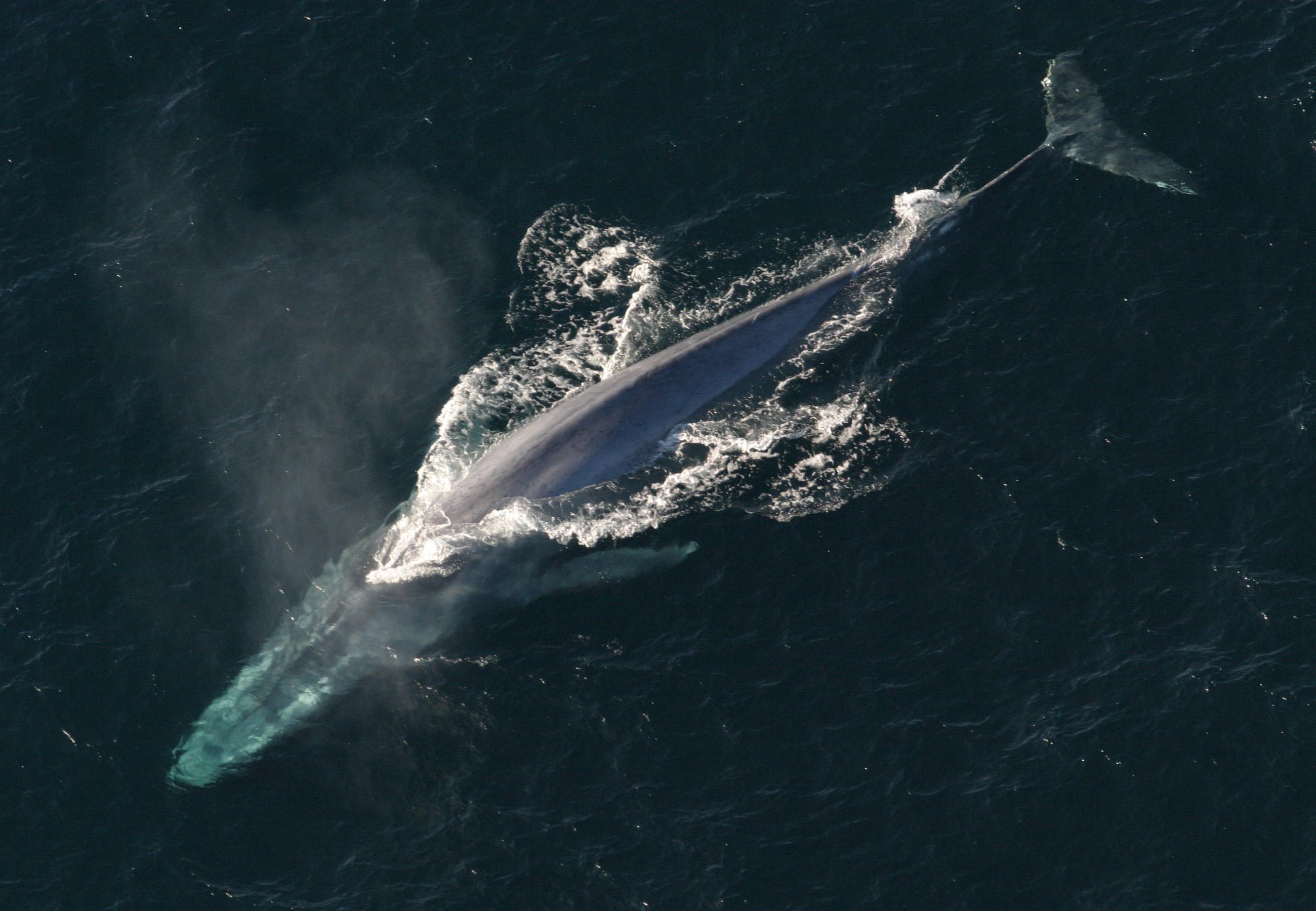
Photo via Wikimedia Commons
Population
Estimated 10,000–25,000 individuals globally
Location
All major oceans, with distinct populations in the North Atlantic, North Pacific, Southern Ocean, and Indian Ocean
Overview
Blue whales were brought from an estimated 350,000 individuals to approximately 1,000–3,000 by commercial whaling between 1900 and 1966, when the International Whaling Commission finally banned their harvest. Recovery has been slow — blue whales reproduce at very low rates, and the remaining populations still face significant threats from ship strikes and fishing gear entanglement.
Why they're at risk
- !
Ship strikes — blue whales surface to breathe in the same shipping lanes that carry commercial vessel traffic. Collisions are a leading cause of death.
- !
Entanglement in fishing gear, particularly near coastal feeding grounds.
- !
Ocean noise pollution interferes with long-distance communication and navigation.
- !
Climate change altering krill distribution — blue whale feeding grounds are shifting as ocean temperatures change.
Reasons for hope
- ✓
The Southern Ocean blue whale population, once reduced to perhaps 400 individuals, has shown signs of recovery in recent decades.
- ✓
The 1986 International Whaling Commission moratorium stopped commercial whaling of blue whales globally.
- ✓
Speed reductions for ships in key feeding areas (such as off California) have measurably reduced strike mortality.
- ✓
Acoustic monitoring networks now track blue whale populations across entire ocean basins in real time.