Kakapo
The world's only flightless parrot — individually named, individually managed, and genuinely recovering
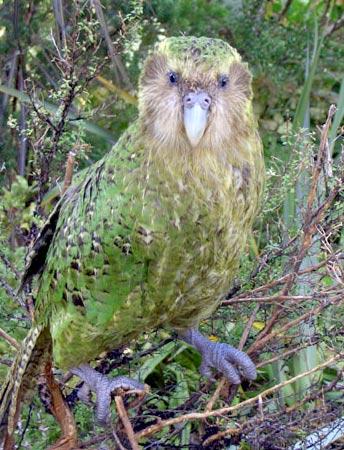
Photo via Wikimedia Commons
Population
Around 250 individuals — every single one has a name
Location
Predator-free islands off New Zealand (Codfish, Anchor, Resolution)
Overview
The kakapo is the world's heaviest parrot, the only flightless parrot, and one of the longest-lived birds on Earth — individuals routinely exceed 90 years. It is also one of the most unusual conservation stories: every living kakapo has a name, a genetic profile, and a dedicated management team monitoring its health. The population was down to 51 individuals in 1995. As of 2024 it stands at around 250 — the result of one of the most intensive individual-animal conservation programs ever attempted.
Why they're at risk
- !
Introduced predators — stoats, rats, and cats eliminated kakapo from mainland New Zealand entirely. They evolved with no land predators and have no instinct to flee them.
- !
Kakapo only breed in years when rimu trees fruit heavily — sometimes only once every 2–4 years — making population recovery extremely slow.
- !
The entire population is confined to three small predator-free islands, making a single disease outbreak potentially catastrophic.
- !
Low genetic diversity from the severe bottleneck creates challenges in maintaining long-term reproductive health.
Reasons for hope
- ✓
The population has more than tripled since the 1995 low of 51 individuals, reaching around 250 by 2024.
- ✓
Each kakapo is individually named and monitored by the Kakapo Recovery Programme — rangers know every bird's personality, health history, and genetic profile.
- ✓
Artificial insemination has been successfully used to improve genetic diversity between birds on different islands.
- ✓
A 2019 boom year — triggered by exceptional rimu fruiting — produced 76 chicks in a single season, the best reproductive year on record.