Giraffe
Evolved their long necks for fighting, not eating — and sleep only 30 minutes a day
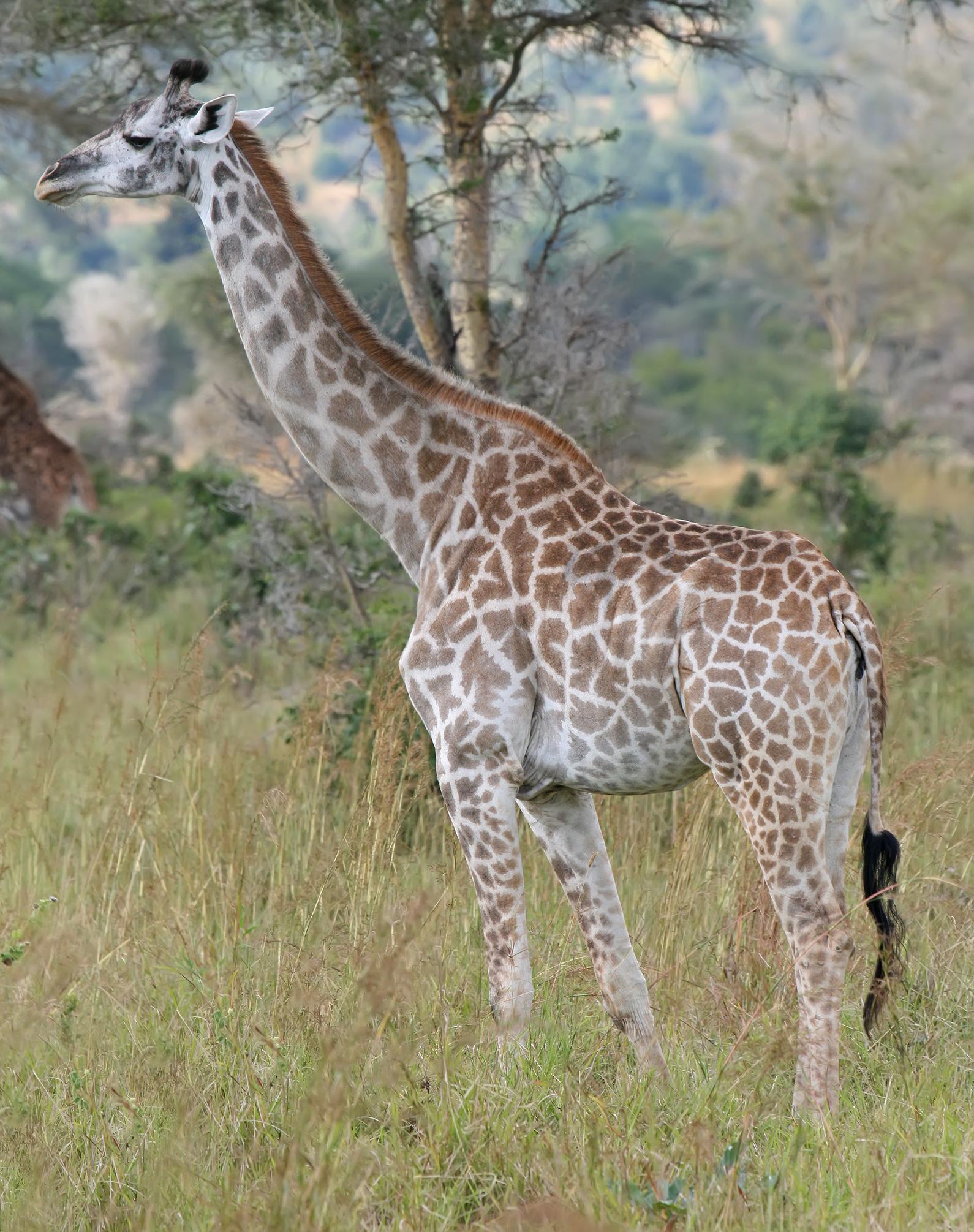
Photo via Wikimedia Commons
Everyone knows giraffes have long necks. Almost nobody knows why. The leading hypothesis — that giraffes evolved long necks to reach high leaves — has been increasingly challenged by research showing that males with the longest necks win more fights, not more food. Giraffes also have one of the most extraordinary cardiovascular systems of any mammal, communicate at frequencies humans can barely detect, and barely sleep at all.
Facts you didn't know
- 1
The leading scientific hypothesis for why giraffes have long necks is sexual selection, not foraging. Male giraffes fight by swinging their necks and striking with their ossicones — a behavior called 'necking.' Males with longer, heavier necks win more fights and sire more offspring. The neck may have been shaped by competition before it was shaped by food.
- 2
A giraffe's heart is roughly 60cm long, weighs 11 kg, and generates twice the blood pressure of a human to push blood 2.5 meters up to the brain. When a giraffe lowers its head to drink, a specialized pressure-regulation system in the neck prevents a fatal surge to the brain.
- 3
Giraffes sleep an average of 30 minutes per day — the least of any mammal. They sleep in short bursts while standing, with full REM sleep (lying down) lasting only a few minutes at a time. Their vulnerability while lying and rising makes extended sleep extremely dangerous.
- 4
Giraffes communicate using infrasound below 20 Hz — below the threshold of human hearing. For decades they were considered nearly silent; recording equipment eventually revealed they produce a constant low-frequency hum, especially at night. What they're communicating is still being studied.
- 5
A newborn giraffe falls approximately 1.8 meters to the ground at birth and must stand and walk within hours. The fall itself appears to stimulate breathing and circulation — the impact is part of the developmental process, not a failure of the birth.