Gorilla
The animal whose fearsome reputation is almost entirely backwards
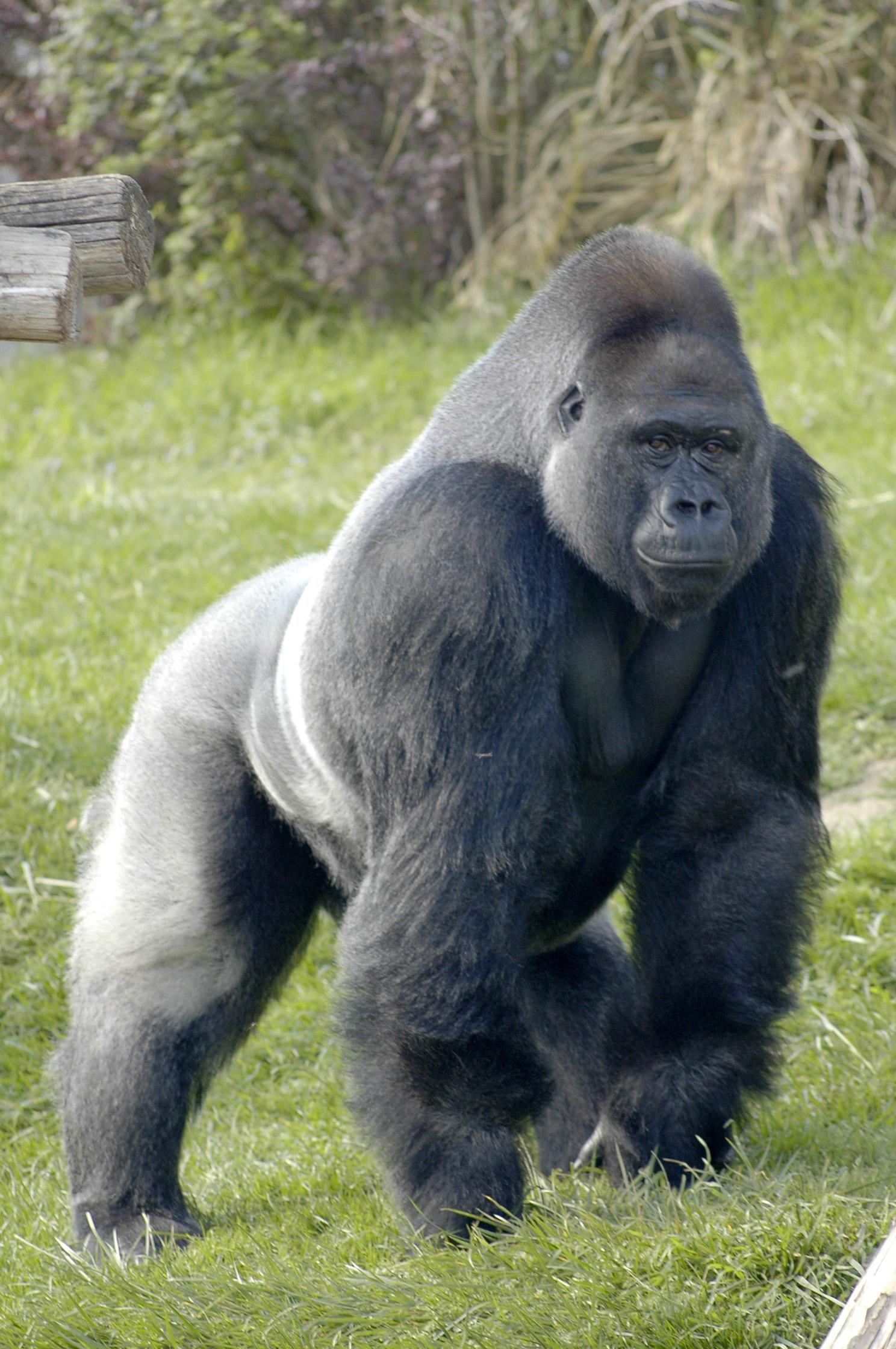
Photo via Wikimedia Commons
Gorillas share approximately 98.3% of human DNA and have a reputation built largely on fiction — films, folklore, and a century of misinterpretation. Research by Dian Fossey and subsequent primatologists has revealed an animal that is gentle, deeply social, and emotionally complex, with family bonds, long-term personal relationships, and a behavioral repertoire that challenges virtually every assumption their reputation rests on.
Facts you didn't know
- 1
The gorilla chest-beat — the most iconic gorilla behavior — is almost never followed by an attack. It's a threat display designed to resolve conflict without fighting. A gorilla beating its chest is communicating 'I'm large and I'm here' — a message that ends confrontations far more often than it starts them.
- 2
Gorillas build a fresh sleeping nest every single night — a new platform of bent branches and leaves, never reused. The daily construction represents significant behavioral investment in hygiene and parasite avoidance, and is one of the behaviors that distinguishes them from other great apes.
- 3
Gorillas have been observed using tools in the wild — wading into water while using a stick to gauge depth, and using branches as walking aids in unstable terrain. This places them in the small group of animals confirmed to use objects as functional instruments.
- 4
Gorillas laugh. Physical play between gorillas — tickling, chasing, wrestling — produces a panting vocalization structurally and contextually equivalent to human laughter, with the same rhythmic pattern and the same social triggers: unexpected contact, play reversal, and bonding.
- 5
Silverback gorillas mediate conflict within their group — intervening between feuding females or juveniles, positioning themselves between disputants, and using vocalizations to de-escalate tension. Peacekeeping requires understanding others' social relationships and anticipating conflict before it escalates.