Shark
Ancient guardian of healthy oceans
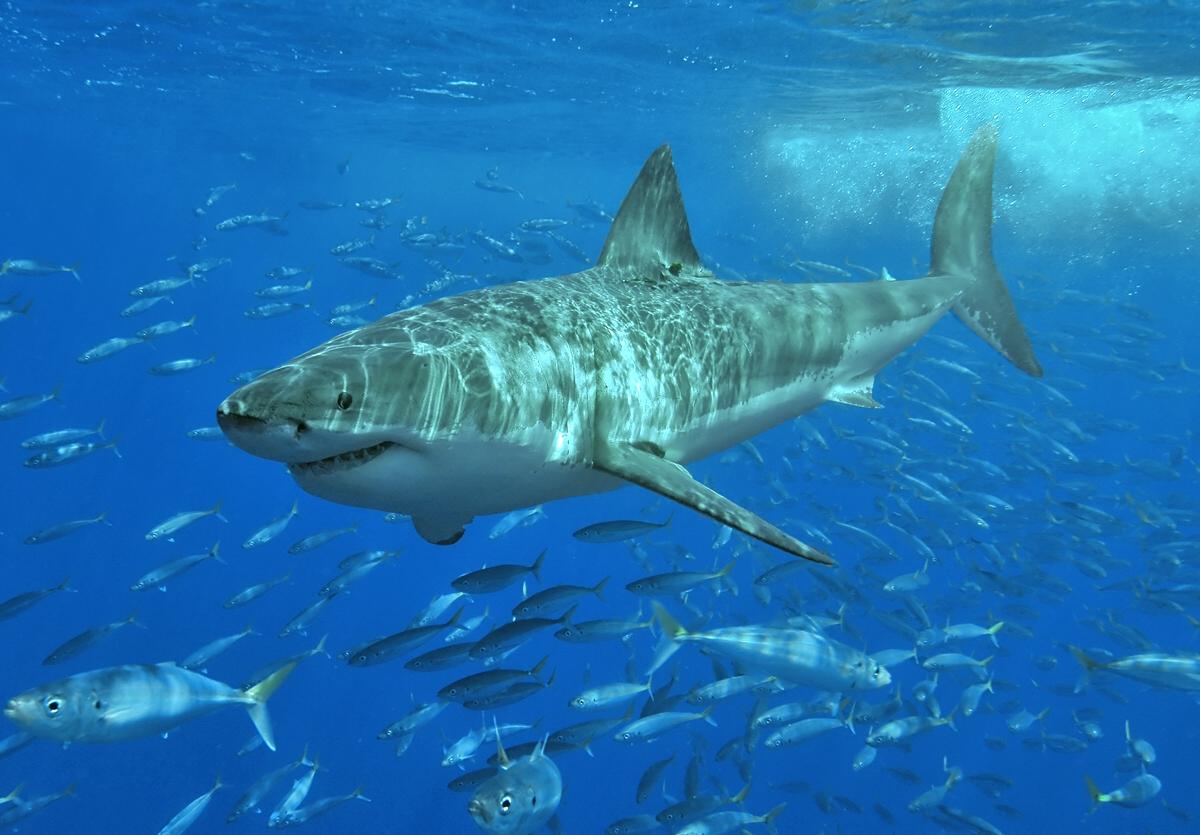
Photo via Wikimedia Commons
Overview
Sharks have patrolled Earth's oceans for over 450 million years — long before dinosaurs. They're apex predators that keep marine ecosystems in balance, and they're far more at risk from us than we are from them.
Friendly fact
Sharks have been observed "playing" with floating objects and seem to enjoy being scratched on the nose during diver interactions.
Fascinating facts
- 1
You are more likely to be struck by lightning, killed by a vending machine, or bitten by another person in New York City than attacked by a shark.
- 2
Sharks are killed by humans at a rate of approximately 100 million per year; sharks kill fewer than 10 people annually on average.
- 3
Sharks can detect one drop of blood diluted in 25 gallons of water.
- 4
Most shark species are endangered or critically threatened due to overfishing.
- 5
Whale sharks — the largest fish on Earth — feed exclusively on tiny plankton and are harmless to humans.
Myth vs. Reality
Myth
Sharks are mindless killing machines.
Reality
Sharks are curious, intelligent animals. Most "attacks" are investigatory bites — the shark realizes you're not prey and moves on.
Myth
Shark-infested waters.
Reality
The ocean is the shark's home. Calling it "infested" with sharks is like calling a forest "infested" with deer.
Myth
Sharks must keep swimming or they die.
Reality
Some species do need to keep moving, but many sharks — including great whites — can rest on the ocean floor using buccal pumping to breathe.
🕸️ Food Web
Arrows show energy flowing from prey up to predator.
Eaten by
Eats
Adult sharks have very few predators — orcas are one of the rare animals that hunt them.