Stingray
Gentle bottom-dwellers that only want to be left alone
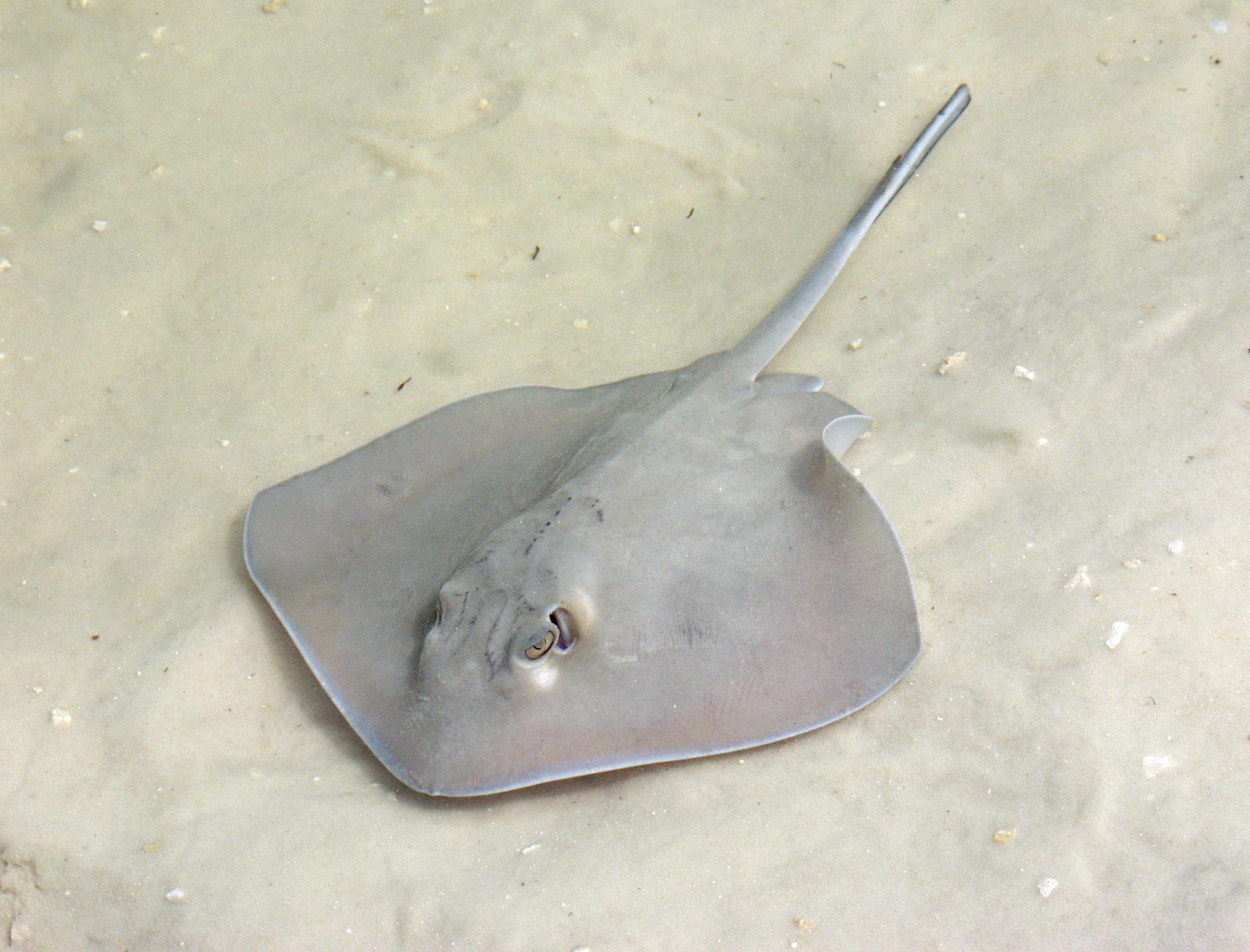
Photo via Wikimedia Commons
Overview
Stingrays have a fearsome reputation, largely amplified by the tragic death of Steve Irwin in 2006. But stingray attacks are extraordinarily rare — these flat, graceful animals are shy and docile, and their sting is a last-resort defense used only when stepped on.
Friendly fact
At Stingray City in the Cayman Islands, southern stingrays actively approach snorkelers to be hand-fed. Locals say the rays "know" the sound of boat engines and swim over expectantly.
Fascinating facts
- 1
Stingrays are closely related to sharks — both are cartilaginous fish, meaning their skeletons are made of cartilage, not bone.
- 2
Stingrays "see" the world primarily through electroreception — they detect the electric fields of prey buried in sand.
- 3
Stingray cities, like the famous Stingray City in the Cayman Islands, see thousands of tourists interact with stingrays daily with no serious incidents.
- 4
Stingrays bury themselves in sand to rest and ambush prey — not to hide from humans, but accidentally camouflaging from them.
- 5
Some stingray species give birth to live young, which are born as tiny, fully formed versions of the adult.
Myth vs. Reality
Myth
Stingrays are aggressive.
Reality
Stingrays are among the most docile marine animals. Every recorded sting has been from a ray that was accidentally stepped on or handled. Unprovoked attacks don't happen.
Myth
Stingray venom is always deadly.
Reality
Stingray venom causes extreme pain but is rarely fatal. Steve Irwin's death was caused by the spine piercing his heart — an extraordinarily unlucky anatomical hit that is essentially unique in recorded history.
Myth
Stingrays are related to manta rays, which are dangerous.
Reality
Manta rays are related to stingrays and are entirely harmless — they filter-feed on plankton and don't even have a functional stinging spine.
🕸️ Food Web
Arrows show energy flowing from prey up to predator.
Eaten by
Eats
Stingrays spend most of their time foraging along the seafloor, using electroreception to find buried prey.